How this feature connects to others
Builds on
Feature overview
Why you need to go beyond your immediate network
When founders first look for people to interview, they typically start with friends, family, and colleagues. This is understandable — it is the easiest place to start. The problem is that people who know you are far more likely to tell you what you want to hear than what is actually true.
Responses from people in your personal network tend to be more positive and less specific than responses from strangers who genuinely have the problem you are trying to solve. If you want useful data, you need to hear from people who have no personal reason to be kind to you.
Who to invite
Your survey should go to people who match your customer segment — people who actually have the problem you are trying to solve. If you are building a tool for freelance designers, your invitees should be freelance designers, not developers who occasionally do freelance work.
Think carefully about the specific criteria that define your target customer: industry, job function, company size, specific behaviors, or a particular situation they find themselves in. Use these criteria to filter who you invite. Quality matters much more than quantity. Ten well-targeted responses will teach you more than one hundred from the wrong people.
How to invite respondents in zigzag
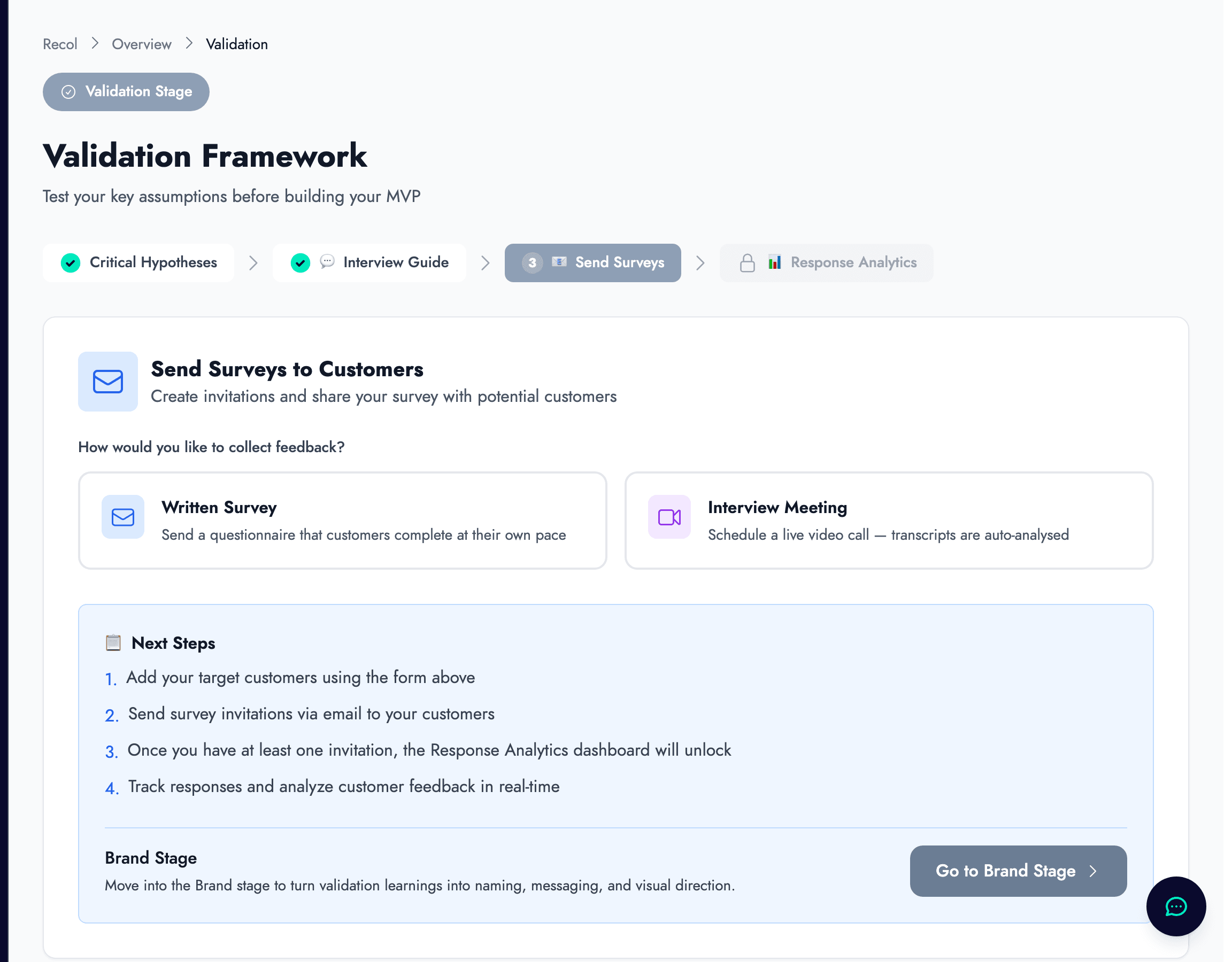
Zigzag provides a customer invitation tool where you can add email addresses and send survey invitations directly from the platform. Each invitation includes a unique link to the questionnaire, and you can track who has opened the invitation and who has completed the survey.
You can also share the survey link directly outside the platform — paste it into a LinkedIn message, post it in a community forum where your target customers are active, or include it in a relevant email thread. The platform tracks completion regardless of how respondents access the link.
What to write in the invitation
Keep your invitation message short. Explain who you are, what you are working on in general terms (without pitching your product), and why you would value their input. Do not oversell.
Tell them honestly how long the survey will take. If you say five minutes and it takes fifteen, people will abandon it halfway through and feel misled. If your survey takes fifteen minutes, say so, and make sure every question is earning its place.
Response rates and what to do about them
Most surveys sent to strangers receive response rates between five and twenty percent. Do not be discouraged by this. Ten thoughtful responses from well-targeted individuals is more than enough to start identifying patterns.
If your response rate is very low, consider whether your invitation message is clear and compelling, whether you are reaching people who actually have the problem, or whether the survey itself is too long or confusing. Following up once with people who opened the invitation but did not complete it is entirely appropriate and often yields additional responses.