How this feature connects to others
Builds on
Feature overview
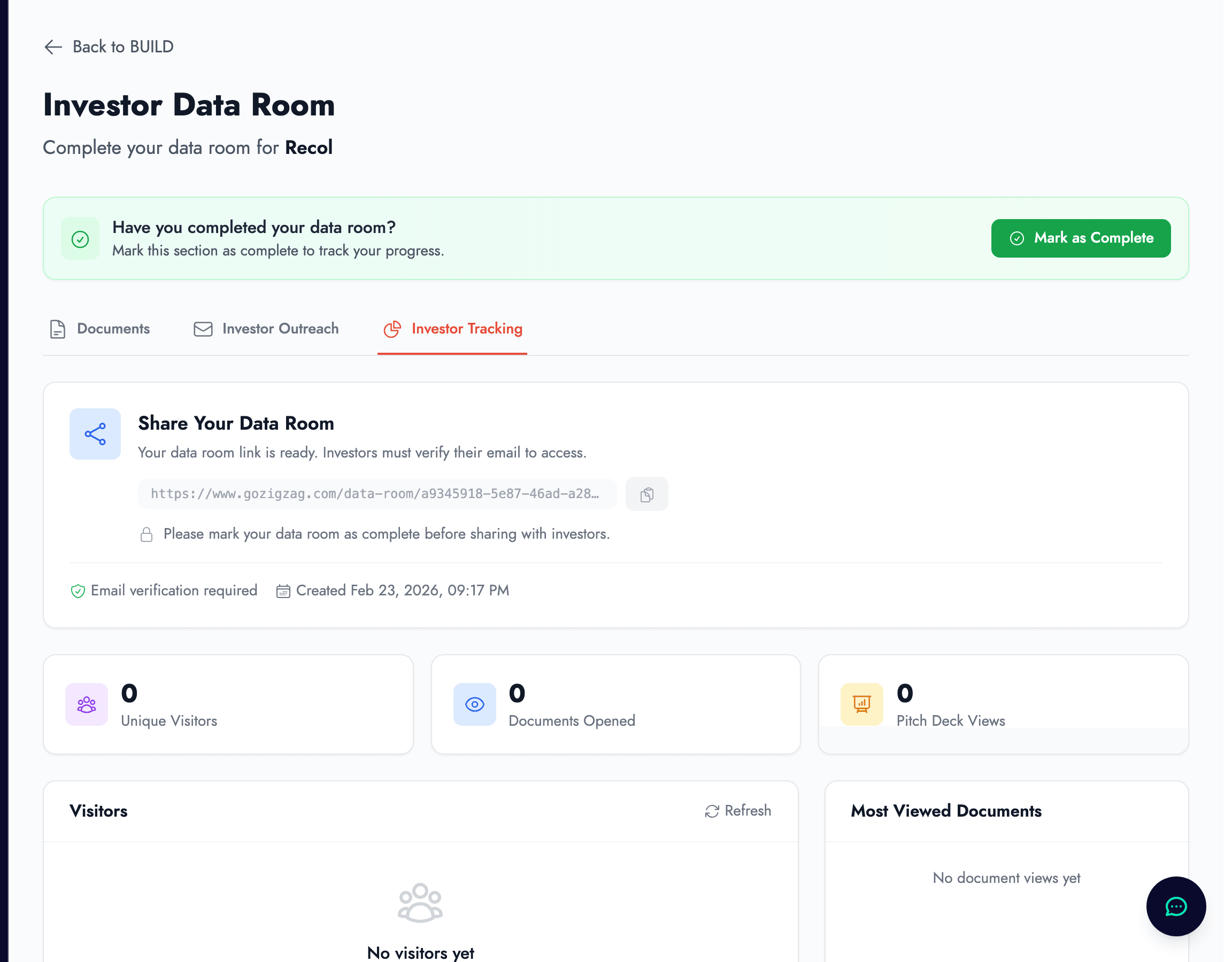
What investor tracking is
Investor tracking is the practice of maintaining a structured record of every investor you have contacted, where each conversation stands, what the agreed next step is, and what was discussed in each interaction.
Think of it as a CRM — a Customer Relationship Management system — for your fundraising process. The "customers" in this context are investors. Without a system, it is easy to lose track of who you have contacted, forget to follow up at the right time, or confuse what you told different investors during different conversations.
Why tracking is important during a fundraising round
A fundraising round can involve dozens or hundreds of investor conversations happening simultaneously over weeks or months. Without a system, you will drop things. You will forget to follow up with someone who showed genuine interest. You will send the same introductory email twice to the same person. You will lose track of who has your data room link and what they have viewed.
Investors notice when a founder is disorganized. A follow-up that arrives a month late, a response that seems to confuse them with another investor, or an email that references a conversation you have clearly confused with a different one — each of these erodes confidence in your operational ability. Fundraising is itself a demonstration of your ability to manage a complex, multi-stakeholder process.
What to track for each investor
For each investor, you want to record: their name and fund, how you made contact, the date of your first outreach, the current stage of the conversation, who the key decision-maker at the fund is, the materials you have shared and when, notes from each meeting or email exchange, and the agreed next step with a specific date attached.
The "agreed next step with a date" field is the most critical. A fundraising conversation without a clear, calendar-confirmed next step tends to stall indefinitely. Always end each interaction with an explicit agreement about what happens next.
How zigzag supports investor tracking
The investor tracking feature in the zigzag data room allows you to record investor interactions, update the status of each conversation (outreach sent, introductory call, pitch meeting, due diligence, term sheet, closed), and view the full history of each relationship.
The analytics dashboard within the data room shows you which documents each investor has viewed and how much time they spent on each one. An investor who spent twenty minutes on your financial projections is almost certainly forming a detailed question — that is useful context before your next call with them.
How tracking connects to the rest of your fundraising process
Investor tracking sits at the final stage of a process that begins with your Lean Canvas and customer validation. By the time you are tracking investor conversations, you have assembled a complete set of materials and done the foundational work to support them.
Good tracking also lets you report your fundraising progress accurately — to your co-founders, to advisors, to existing investors, and eventually to new investors who ask where the round stands. Knowing precisely where you are in your fundraising process, at any moment, is as important as knowing where you are in your product development.