How this feature connects to others
Builds on
Feeds into
Feature overview
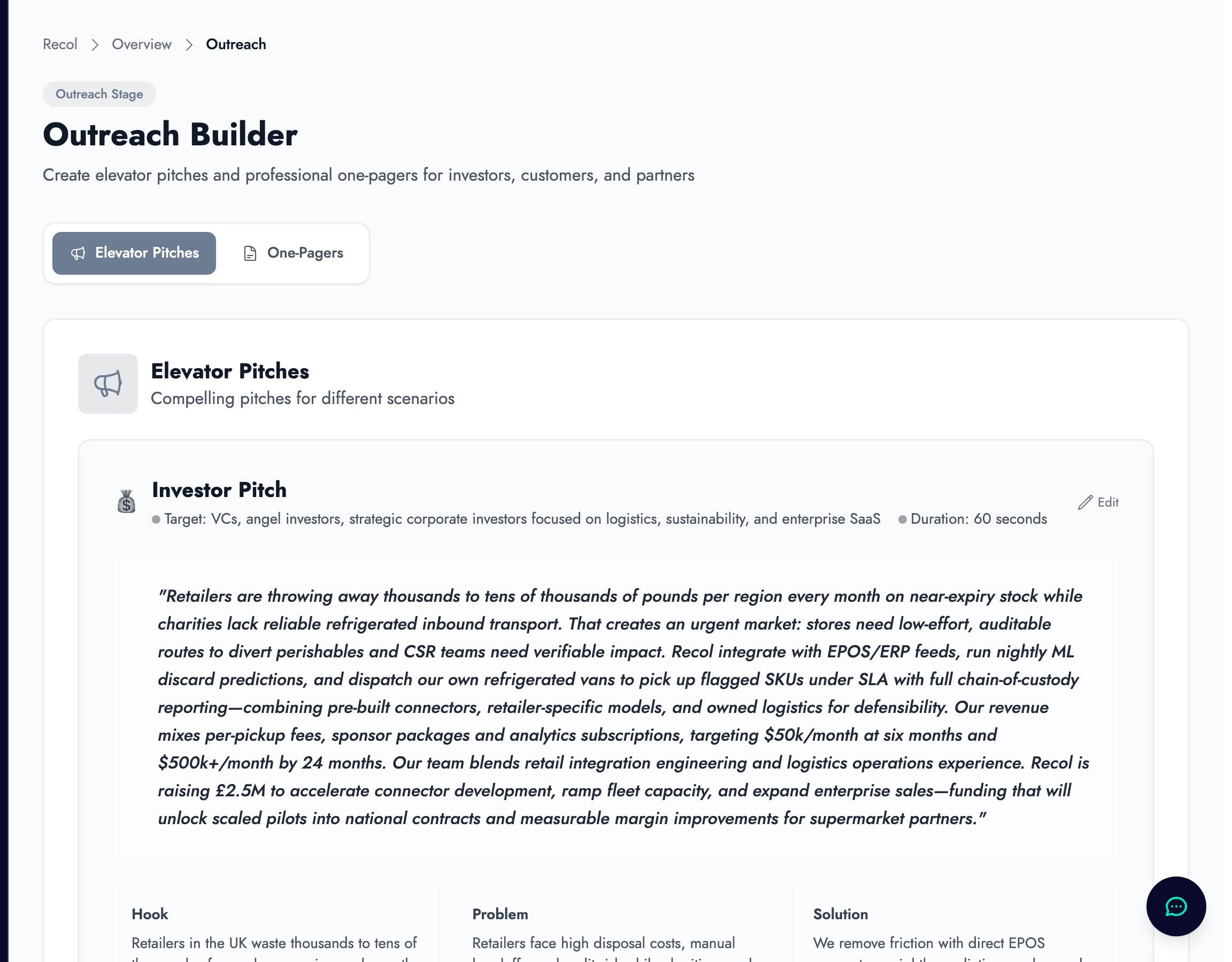
What an elevator pitch is — and what it is not
An elevator pitch is a brief, clear explanation of your startup that you can deliver in thirty to sixty seconds. The name comes from the scenario of meeting an investor in an elevator and having just that amount of time to explain what you do.
But elevator pitches are not just for investors. You will use versions of this explanation with potential customers, potential hires, journalists, and anyone else who asks what you are working on. Having a crisp, well-thought-out answer makes all of those conversations easier and more productive.
Why this comes after brand elements
An elevator pitch draws on your mission, your value proposition, and your understanding of your customer. All of those come from your brand elements and your Lean Canvas. If those foundations are not yet clear, your pitch will be vague.
The right time to write your elevator pitch is after you have defined your brand elements and before you start building investor materials like your pitch deck and one-pager. The pitch becomes the core narrative that runs through all of those documents.
What zigzag generates
Zigzag generates multiple versions of your elevator pitch, each tailored to a different audience or context. One version might be designed for conversations with potential customers, focusing on the problem and the relief your solution provides. Another might be calibrated for investor conversations, emphasizing the market opportunity and traction.
Each version includes a key hook — the one thing that makes your startup interesting and memorable to that specific audience. You can edit any version directly, or use them as starting points for writing your own.
The anatomy of a good elevator pitch
A good elevator pitch answers four questions in the span of a few sentences: What is the problem? Who has it? What is your solution? And why are you the right team to solve it?
The answers must be specific. "We help small businesses" is too broad to be memorable. "We help freelance graphic designers invoice clients and get paid on time without chasing" is specific enough that someone can remember it and repeat it to someone else. Specificity is what makes a pitch stick.
Practice matters more than polish
The best elevator pitch is one you can deliver naturally without sounding rehearsed. Writing a polished version is the starting point. The next step is saying it out loud — to a friend, a family member, or into a voice note — until it sounds like something you would actually say.
Pay attention to the questions people ask after you deliver it. Consistent follow-up questions usually signal that something in the pitch is unclear, or that you left out information that listeners need to understand your idea. Those questions are valuable feedback to incorporate into your next revision.