How this feature connects to others
Feature overview
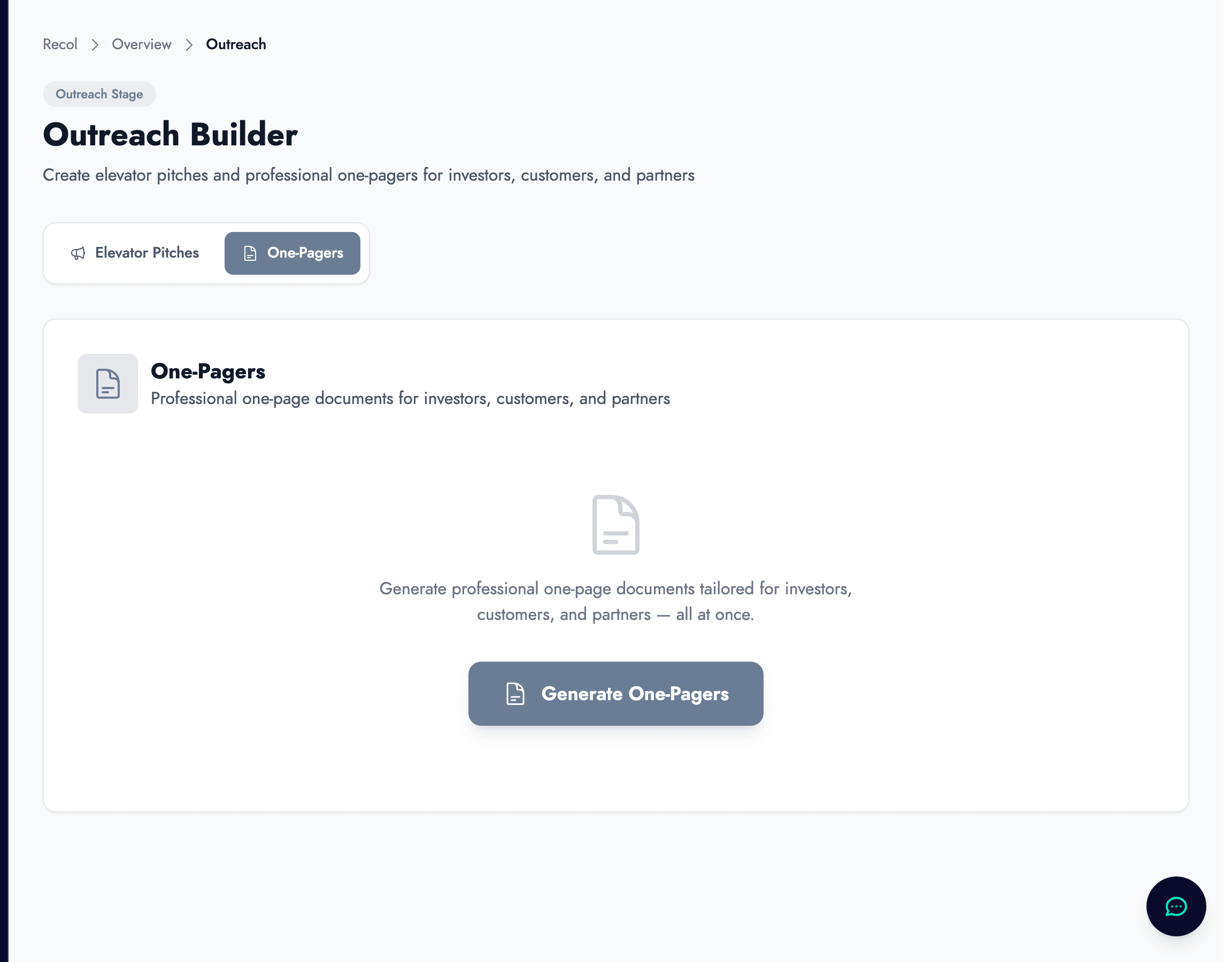
What a one-pager is
A one-pager is a brief summary document — typically one page in length — that covers the most important aspects of your startup: the problem, the solution, the market opportunity, the business model, and why you are the right team to build it.
It sits between an elevator pitch and a full pitch deck in terms of depth. It is longer than a verbal summary but shorter than a presentation. That makes it useful for situations where there is not time for a full pitch but where a few sentences in an email are not enough context.
When to use a one-pager
The most common use is in investor outreach. When you send a first email to an investor, attaching a one-pager gives them the context to decide whether to take a meeting. A full pitch deck is too much for an initial contact. A one-pager is just enough.
You will also find one-pagers useful when recruiting early advisors, in partnership conversations where you want to explain your company quickly, and when briefing journalists or bloggers who might write about you. Any time you need to introduce your startup to someone who does not yet know you, a one-pager is the right tool.
What zigzag generates
Zigzag generates different versions of your one-pager for different audiences: an investor-focused version that emphasizes market size and business model, a customer-focused version that emphasizes the problem and relief, and a general-purpose version suitable for press or networking contexts.
Each one-pager is generated as a Google Document that you can edit and share with a link. The content is drawn from your Lean Canvas, brand elements, and elevator pitches — so having those completed first directly improves the quality of the output.
What goes in a one-pager
A typical investor-facing one-pager includes: your company name and tagline, a description of the problem you solve, your solution, your target market, your business model, any traction or early validation you have, your team, and a clear call to action — usually an invitation to take a meeting.
Keep it genuinely short. One page means one page. If you cannot say what needs to be said in one page, the problem is almost always that your thinking has not yet been distilled enough — not that you need more space. The discipline of one page is part of the value.
The one-pager in your fundraising toolkit
When you are ready to reach out to investors, your one-pager is one of the primary tools you will use. It goes out early, before a full pitch. The pitch deck comes when there is genuine interest. Your investor data room comes after that, when an investor wants to examine the details.
Understanding this sequence helps you prepare each piece of material at the right time, in the right level of detail, rather than putting everything into a single document and overwhelming people before they have reason to care.